

New National Study: 94% of Pro Athletes Support the Right to Engage in Activism
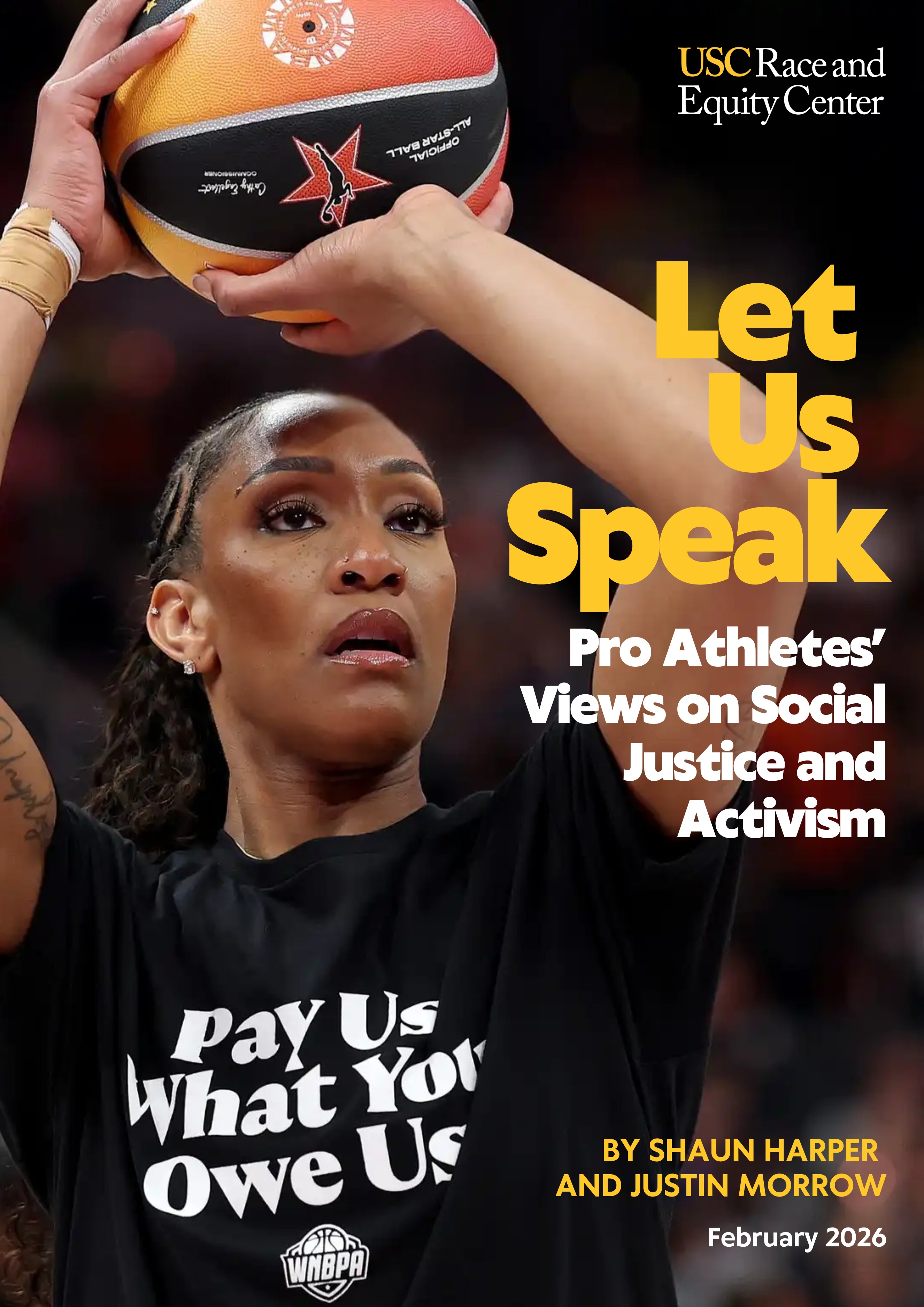
Front cover of the report, "Let Us Speak: Pro Athletes’ Views on Social Justice and Activism"
USC Race and Equity Center Releases Results of Groundbreaking Survey on Pro Athletes’ Views on Social Justice and Activism
Our study makes painstakingly clear that pro athletes want to speak publicly about injustice, yet too many feel unsafe doing so.”
LOS ANGELES, CA, UNITED STATES, February 18, 2026 /EINPresswire.com/ -- A vast majority of professional athletes believe they should be allowed to engage in political activism and intend to use their social media channels to raise awareness about racial injustice, according to a report issued today by the Race and Equity Center at the University of Southern California.— Shaun Harper
The report, titled Let Us Speak: Pro Athletes’ Views on Social Justice and Activism, comes at a time of heightened debate over a growing number of political comments made by athletes at the 2026 Winter Olympics and Paralympic Games
“Our study makes painstakingly clear that pro athletes want to speak publicly about injustice, yet too many feel unsafe doing so,” says University of Southern California Professor Shaun Harper, the USC Race and Equity Center’s founder and chief research scientist. “My co-author, Justin Morrow, and I hope our report not only highlights the survey respondents’ perspectives, but also empowers athletes all across America to leverage their platforms to highlight and dismantle structures and systems that sustain injustice.”
Based on survey responses from 407 professional athletes in the WNBA, Major League Soccer, and National Women’s Soccer League, the study offers one of the most comprehensive cross-league examinations to date of how athletes view racial justice activism, their past participation, and their plans for future engagement.
Major Findings:
- 94% of athletes agree that players should be allowed to use their platforms to engage in activism.
- Social media posting is the most common form of activism and remains the most anticipated future action, with 71.6% of athletes planning to post about racial injustice in the future.
- During summer 2020, 74.8% posted about racial injustice on social media, and only 12.3% reported doing none of the activism activities listed in the survey during the four months following George Floyd’s murder.
- Large majorities support team-wide, league-wide, and cross-league collaboration on justice efforts.
- WNBA players reported the highest levels of activism across nearly every measure, including past participation, anticipated engagement, and fewer perceived barriers.
- Black athletes reported the highest levels of visible and political engagement and were most likely to say that nothing would prevent them from participating in future activism.
- While white athletes expressed strong support for racial justice in principle, they were more likely to limit engagement to lower-risk activities, to cite concerns about backlash, and to stay out of politics.
- Athletes who grew up mostly in the U.S. reported higher levels of protest participation and political engagement than their teammates from other countries.
- Fear of saying “the wrong thing” was the most frequently cited anticipated barrier to future activism.
- Just over half of athletes said nothing would prevent them from engaging in future activism.
- Fewer than 2% of survey respondents expressed carelessness about racial injustice.
“Few voices cut through the noise like those of athletes; when they speak millions pay attention,” says Justin Morrow, the USC Race and Equity Center’s head of sports partnerships and programs. “The players we surveyed recognize the power of their platforms, and they want to use them with purpose. As someone who has lived that experience, I know that athletes can be catalysts for change when they are allowed to speak.”
Let Us Speak concludes with 18 practical recommendations for athletes, coaches, executives, and players associations. It also includes one concrete suggestion for spectators: “Even fans whose perspectives and political views clash with those being expressed by their favorite athletes should respect those players’ free speech rights.”
Access the full report at https://uscrec.info/activism
Shaun Harper
USC Race and Equity Center
+1 812-219-9655
sharper@usc.edu
Legal Disclaimer:
EIN Presswire provides this news content "as is" without warranty of any kind. We do not accept any responsibility or liability for the accuracy, content, images, videos, licenses, completeness, legality, or reliability of the information contained in this article. If you have any complaints or copyright issues related to this article, kindly contact the author above.
